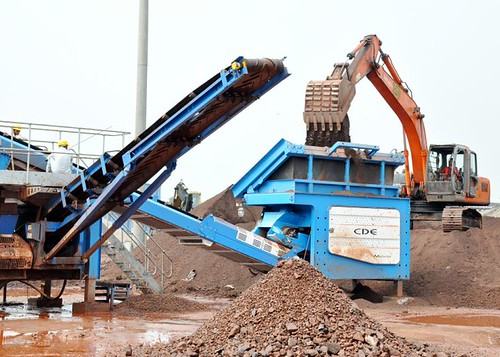

The Customs, Excise and Service Tax Appellate Tribunal (CESTAT) in Bangalore has issued a landmark ruling, setting aside a significant service tax demand levied against an iron ore processor. The tribunal determined that the screening and grading of iron ore constitute mining-related activities, effectively reclassifying them under the category of Mining Services rather than Business Auxiliary Service (BAS). This decision, delivered this month, provides critical clarity for companies operating within the Indian mineral sector who have faced long-standing disputes over service tax categorization.
Contextualizing the Service Tax Dispute
In the Indian tax landscape, the classification of services often determines the applicable tax rate and the period of limitation for revenue authorities to raise demands. Historically, the Department of Revenue frequently sought to categorize various post-extraction activities under the broader umbrella of Business Auxiliary Service to maximize tax collection. This practice often ignored the specific technical nature of the work performed at mine sites.
Companies providing value-added services, such as crushing, screening, and grading, have long argued that these functions are inextricable from the mining process itself. By treating them as general business support, tax authorities imposed burdens that many industry participants argued were legally inconsistent with the Finance Act. This recent CESTAT ruling serves as a corrective measure, aligning the tax treatment with the physical reality of mineral processing.
Analyzing the Tribunal’s Rationale
The Bangalore bench of the CESTAT emphasized that screening and grading are essential components of mining operations. The tribunal noted that these processes serve to prepare raw ore for commercial viability, a function that does not exist independently of the mining lifecycle. By shifting these activities into the Mining Services category, the tribunal effectively limited the scope of BAS, which is intended for commercial support services unrelated to core industrial extraction.
Legal experts observe that this ruling relies on the principle of specific versus general classification. Since Mining Services is a more specific category for activities conducted at a mine, it takes precedence over the generic Business Auxiliary Service classification. This distinction is vital for taxpayers, as it dictates how they account for their services under the historical service tax regime, which was largely subsumed by the Goods and Services Tax (GST) in 2017.
Industry Implications and Financial Impact
For mining contractors and processing firms, this ruling creates a pathway to contest outstanding tax demands that were based on the incorrect classification. Companies currently in litigation regarding similar service tax notices may use this judgment as a precedent to seek relief from the tribunal or appellate authorities. The decision underscores the importance of correctly defining the scope of work in service contracts to withstand judicial scrutiny.
Furthermore, the ruling highlights the necessity for tax authorities to adopt a more nuanced understanding of industrial processes. When revenue departments overlook the technical definitions of specific industrial services, they risk creating regulatory uncertainty that can deter investment in the mining sector. This judgment provides a layer of protection for businesses that have acted in good faith while navigating complex tax definitions.
Future Outlook for Tax Compliance
Market analysts are now watching for how the Revenue Department responds to this ruling at the appellate level. If the order is accepted as a binding precedent, it may lead to a wave of revisions in pending tax litigation cases across the country. Stakeholders should review their historical service contracts and tax filings to determine if they qualify for relief under this interpretation. Moving forward, the industry expects a clearer demarcation between ancillary business support and core industrial services, which will likely simplify tax compliance for mineral extraction and processing firms.
Frequently Asked Questions
Why is the distinction between Mining Services and Business Auxiliary Service (BAS) so significant for tax liability?
The classification determines the applicable tax rate and the statutory period of limitation for revenue authorities to raise demands. By moving activities from the broader BAS category to the specific Mining Services category, companies can challenge tax demands that were based on incorrect, often higher-tax, general support service definitions.
Can companies use this ruling to claim refunds for service taxes paid under the old regime before 2017?
Yes, this ruling serves as a strong legal precedent. Companies currently involved in litigation or those who previously paid taxes under the BAS classification for mining-related activities can leverage this judgment to contest outstanding demands or seek relief from appellate authorities, provided their specific contracts align with the tribunal's interpretation.
Does this CESTAT ruling apply to all mineral processing activities, or is it limited strictly to iron ore?
While the case specifically involved iron ore, the legal principle of 'specific versus general classification' is broadly applicable. The tribunal's rationale suggests that any value-added service which is technically inextricable from the mining lifecycle should be classified under Mining Services, potentially offering protection to other mineral sectors facing similar classification disputes.
How does the principle of specific versus general classification protect taxpayers in this scenario?
Legal experts apply this principle to prioritize the most accurate service category over generic ones. Since Mining Services is a specialized category directly related to industrial extraction, it takes precedence over the catch-all Business Auxiliary Service. This prevents authorities from arbitrarily grouping specialized technical tasks into broader, less relevant tax brackets.
What should mining contractors do now to ensure their current contracts are shielded from similar tax disputes?
Contractors should conduct a thorough review of their historical and current service contracts to ensure the scope of work clearly defines activities like crushing and screening as integral parts of the mining process. Aligning contract language with technical industrial definitions will help withstand judicial scrutiny and future tax audits.